


We put that on every care label because it's the right advice but let's be honest—nobody actually does all that.
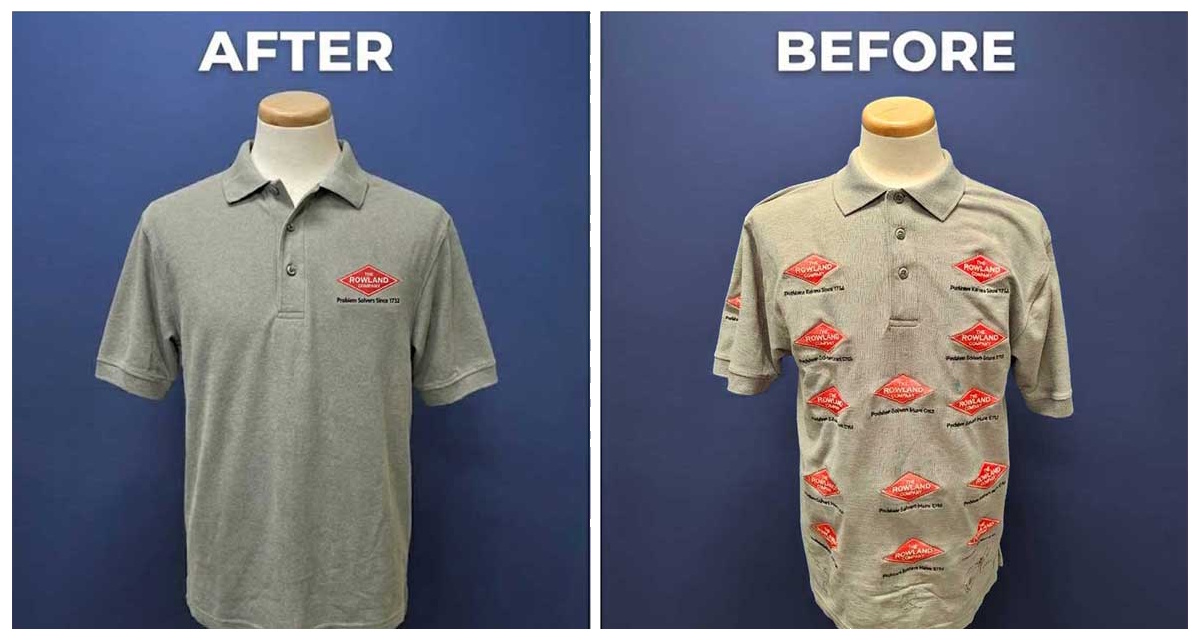
A few months back, I ran into a friend wearing a polo we'd embroidered for his company. I'd seen that shirt a hundred times, but this time it looked beat up. The logo was puckering, the fabric was pulling weird. It didn't look like him anymore, and it definitely didn't look like his brand.
I asked if he'd send it back so we could take a look.
That shirt kicked off a deep dive we probably should've done years earlier. We took the same design and ran it every way we could think of—different digitizing, different backings, different densities, different construction. Then we tested heat-applied versions alongside the embroidery. Turned out, for that specific logo—dense stitching, fine text, big open areas—the heat-applied version held up better. Not because embroidery is bad. Because geometry matters.
That design was creating stress points that built up with every wash. We could see it under magnification, measure it, and honestly predict when it would start to fall apart.
That one shirt made it clear: we needed a better way to test this stuff.
Most decoration testing assumes ideal conditions. Care labels followed perfectly. Light loads. Gentle cycles. Hang drying.
That is not how people live.
Real life looks more like this:
Decoration that survives approval samples but fails after months of actual use is not just disappointing. It is expensive.
Instead of rushing heat applied graphics to market, we spent six months building something uncommon among independent decorators: an in-house professional wash lab.
We installed a DynaWash system, the same lab-grade equipment used by independent textile testing facilities and major retailers, and developed protocols designed around real-world behavior, not ideal care instructions.
Our testing now simulates:
We built our wash testing around the person who wears the garment, not the person who approves the sample. We, too, fill the entire washer with clothes when we're in a rush. If decoration cannot survive how people actually wash, wear, and live in their clothes, it is not ready. This approach does not just protect heat applied graphics. It leads to better decisions across all decoration methods.
Sometimes embroidery is the right answer.
Sometimes screen printing is.
Sometimes heat applied graphics outperform both.
Our job is not to push a method. It is to choose the one that will last.
Because testing came first, scaling came second. Once our protocols were proven, we expanded heat applied graphics as a core production capability, not a side offering. This includes:
If you are choosing a decoration partner, durability should not be an assumption. It should be something that can be explained, demonstrated, and proven.
We still recommend best practices.
We still hope people follow them.
But we do not assume they will.


